Showing posts with label France. Show all posts

Wednesday, December 1, 2010

A Tale of Two Visas

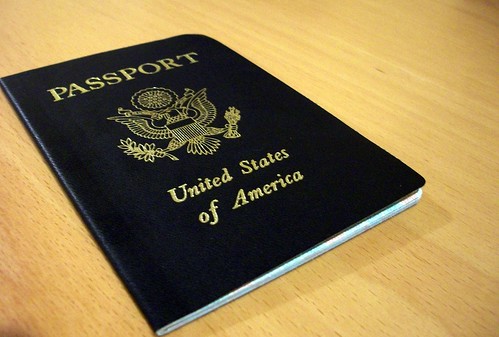
Creative Commons, Damian613
One thing about the French: they love their bureaucracy. Cinema passes, library cards and bus passes each require a passport-sized photo to verify, each time you use them, that you are actually the individual to whom each card was issued. Opening a checking account requires documentation proving that you live at the address you claim is your residence and, if you aren't the primary occupant of record, a letter from that person is necessary, along with documentation that they are, in fact, the primary occupant of record.

When I went to the French embassy in Washington during the summer of 2005 to obtain my student visa (for which one must apply in person), I was carrying approximately a pound of paperwork. In addition to my passport - in good condition, with at least two blank pages at the back - the requested photocopies of the appropriate pages and various other forms of official identification, I also had documentation of my enrollment at GW, documentation of my acceptance into my study abroad program, documentation from my parents that they had sufficient funds ($600/month was the minimum amount, I believe) to support me for the duration of my stay in France, proof of my flight itinerary, documentation from my study abroad program that I would have a legitimate place to live during my time in France, two passport-sized photos and a credit card for the visa application fee, although I no longer remember what it was - less than $150, possibly less than $100.

I walked out ninety minutes or so later, the proud bearer of a pretty French short-stay visa that took up a full page in my passport. I was a little confused as to why I had been issued a short-stay visa, since I was going to be in the country for approximately eight months, which did not, in fact, qualify as "short," but I was confident that someone would explain it to me before it expired on October 30th.

Official logo of the French Republic,
via Wikimedia Commons
Among the handful of students in my program planning to stay in France for a full year of study, rumors circulated about what was involved in securing a titre de séjour (long-stay visa). We determined that some type of medical visit was involved, and were assured that we would receive official notification of what was required and when. Sure enough, in late October, I received a letter notifying me of a medical visit in Marseille in November. I was assured that my fears of being deported because my short-stay visa actually expired at the end of October were groundless.

I made my way to the appointed office at the appropriate time on the designated day and moved from one waiting area to the next with several of my fellow students and a lot of people who looked like they were probably trying to renew their permanent resident status. My eyes were checked, my weight noted. (I can confirm that French women really don't get fat: after two months of feeling like I was consuming more food than I'd ever eaten in my life, it turned out I'd lost ten pounds.)

I was escorted to another waiting area, then called into one of three small cubicles built into one wall of the room. A woman explained that I was to remove all clothing and any jewelry from the waist up and wait to be called again for my spine x-ray, then left me to my own devices in the cubicle. I took a deep breath and expelled it - what was becoming my standard method for dealing with situations my self-conscious American brain found dauntingly immodest - then hung my clothes on the hooks provided and stashed my jewelry in my pockets. My name was called from the side of the cubicle opposite the one I'd entered - by a man's voice. I rolled my eyes at myself, took another deep breath and let it out as I stepped into the x-ray room. The doctor, or x-ray technician, or whatever he was, was relatively young and reached out to shake my hand with a smile. I bit the tip of my tongue to keep the slightly hysterical laughter in my head at bay and managed a polite greeting. Five minutes later, I was safely back in my sweater and headed back to the bus station.

Once my x-ray had been declared to show I was healthy (I assume they were looking for evidence of tuberculosis in my lungs), I was instructed to proceed to a government office, conveniently in Aix-en-Provence this time, to secure my visa. The man at the little office window on the street took my paperwork and passport, handed the passport back half a minute later, indicated I was to sign the long-stay visa, stamped and initialed it and waved me on my way with hardly a word. Despite the fact that it was November, my new visa - another colorful full-page seal - was dated October 1st, and gave me leave to stay in France through September 30th of the following year. I breathed a sigh of relief, glad to be done with the process.

Australian Coat of Arms;
public domain, via Wikimedia Commons
Obtaining my student visa for Australia was a completely different experience.

I first tried to apply this past July, wanting to get the AUS$515 payment out of the way as quickly as possible, before my credit card got too bogged down with all the other necessities of my move. I filled out the application - online, no consulate visit necessary! - but came up with an error message when I submitted it, since I was more than four months away from my projected arrival date. Oops.

I shied away from applying in late October, when I was within four months of my departure for Australia, because the exchange rate was awful for the U.S. dollar. I finally bit the bullet on Thanksgiving - last Thursday - because the Aussie had dropped back below USD$1 and I didn't want to delay too long, in case there was a problem. I provided my background information and eCoE (electronic confirmation of enrolment), certified that I'm generally a good, law-abiding person and cringed as I hit "submit" to authorize the AUS$550 charge to my credit card (apparently the cost of a student visa increased some time between July and November).

On November 26th, the day after Thanksgiving, I woke up to an email advising me that my visa had been approved, effective immediately, and that I was welcome to stay in Australia until three months after the end of my degree program. I blinked, and read it again. That was easy. Not only am I set, visa-wise, for the duration of my Masters program, but I have permission to work as soon as my classes begin in February. I don't even have to use a page of my passport, since my visa is stored online.

In summary: French student visas are pretty and cheap compared to the Australian equivalent, but Australian student visas are a better deal all around. They're significantly more expensive but allow you to work 20 hours a week while school is in session and as many hours per week as you like during school breaks, while you can't work at all on a student visa in France; you don't have to trek to the nearest consulate, as you do for a French visa; and the first visa you get for Australia is the only one you need for the duration of your studies, while France requires some hopping around in-country, after your studies have begun, before guaranteeing you can stay. My credit card is still whimpering, but the ease of the application process for my Australian student visa and the prospect of being able to work down under are going a long way toward keeping me optimistic about the whole process.

Look out, Australia, I'll be there in two months!

Thursday, November 25, 2010

Disparate Arrivals

Creative Commons, Phillip Capper
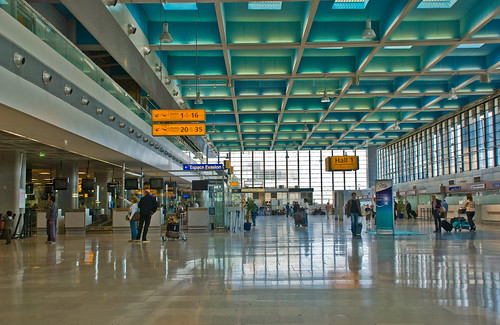
When I arrived at Marseille-Provence Airport to begin my immersive, year-long study abroad program, I had been in airports and on planes for something like 20 hours. I was tired from a sleepless Transatlantic flight and disoriented by the heat, since it hadn't occurred to me that, yes, the Mediterranean is rather warm in early September. I was reminding myself that this was it, I was in France and I'd signed a piece of paper saying I would speak French 100% of the time while I was there. (What's the word for 'luggage carousel?' I wondered as I stared at it, waiting for my bags. What about 'luggage cart?' I don't know anything!) And I was nervously repeating the introduction I'd rehearsed in my head, for after I had (hopefully) found my host mother, whose name and address I knew, but of whom I'd never seen a photo: Bonjour, je m'appelle Jessalyn. J'ai trop de bagages, je sais, je suis désolée. Because "Hello, my name is Jessalyn. I have too much luggage, I know, I'm sorry," is obviously the standard greeting for a stranger you're going to be living with for the best part of a year.

Fortunately, my host mom, Madame C., had been given a photo and spotted me as soon as I stepped out of the baggage claim area. I saw a thinly built, middle-aged redhead jumping up and down, waving a sign with my name on it and gulped as I made my way over, launching into my introduction. Madame C.'s first reaction, after greeting me with les bises (the traditional kiss on each cheek), was to exclaim at how well I spoke. Before I could protest that no, really, I was just a passable mimic with a good ear for accents, she had moved on to exclaiming about my luggage.

After a brief misunderstanding about how long I was staying and lots of internal panicking on my part, we were in the car and on our way, with me trying desperately to keep up with the historical facts about the area and tidbits of current events Madame C. tossed out. I fully understood maybe one sentence in three, but Madame C. seemed happy to relieve me of any need to speak during the drive, and I was grateful for the chance to gather my thoughts and look around.

I had half an hour or so to myself to unpack, and then it was time to tackle dinner. Madame C.'s cheerful questions about my background flustered me, but I did my best. Telling her that my dad was an engineer was easy enough, but explaining that my mom did both health and safety and development work for a national non-profit was a bit beyond the scope of my vocabulary. I settled for a convoluted explanation that her work helped support the doctors at a medical research facility in a roundabout way, and Madame C. happily took control of the conversation again while I tried to figure out how to swallow the plateful of tomates provençales in front of me, given that cooked tomatoes were high on my Foods I Do Not Eat Because They Make Me Gag list.

I fell into bed before nine o'clock, exhausted and faintly nauseated from forcing down three whole tomatoes.

Four months later, I couldn't keep a grin from spreading over my face as I power-walked through Paris' Charles de Gaulle airport, heading from customs to the gate for the short flight to Marseille. That trip was closer to 30 hours than 20, thanks to a three-hour drive to the airport and a four-hour delay in Atlanta, but despite the exhaustion that made my arms feel like lead, saying Bonjour to the customs agent and hearing the PA system announcements in French felt like coming home.

I dashed out of the arrivals hall at Marseille-Provence just in time to catch the bus to Aix. Madame C. picked me up and we went to Sunday lunch at her daughter's house, where a spring semester American student had just arrived the day before. I recognized the dazed look on her face and the pauses in conversation as she tried to find the right words in her head. Don't worry; trust me, it gets easier, I told her as I took several tomates provençales, now one of my favorite dishes, from the platter being passed.

Arrivals in new places can be overwhelming, from struggles with the local language to disorientation from a long trip to cultural and culinary differences between you and the local people. But it's amazing, between an arrival and a departure or from one arrival to the next, how quickly a place where you thought you'd never fit in can start to feel like home.

Sunday, November 14, 2010

Saturday Snapshot: Perfection Provençale


I miss Provence at any number of random moments, but a lot of them seem to hit in November. I think it has something to do with the crisp, clear fall air in the French countryside and the excitement of the winter holidays that starts to creep into the marchés, even before the Christmas markets open.

Back from the October school break, families go for evening walks, bundled up against the autumn chill in the air, and cafés turn on outdoor heaters to let their patrons continue the unofficial national pastime of people-watching.

This photo was taken just outside the town of Lourmarin, in the Luberon region, in November 2005. The Luberon is further inland than Aix-en-Provence, and is home to some of the things we consider distinctly provençal: olive groves and lavender fields, not to mention beautiful skies and charming villages. And, because I couldn’t pick just one photo of that perfect, if chilly, fall day, here’s another – this one of a cottage so picturesquely charming I actually laughed when I saw it. If I lived there, I’d curl up in one of the windows with a book, watching the world go by as my garden prepared itself for winter.


Sunday, October 17, 2010

Saturday Snapshot: les remparts de Carcassonne


This is one of my favorite photos from my year in France, despite the fact that it was taken with my very first digital camera, a clunky, low-megapixel, high-battery consumption HP that some of my friends not-so-fondly dubbed "the brick." It was taken when my parents came to visit for my birthday and we drove around southwestern France playing tourist for a few days.

I'd been to Carcassonne several years before but on a gray, dreary day that did nothing to enliven the walled city's ubiquitous stone. This time, however, we had spectacular weather. It was mid-February, but the daytime temperatures hovered around 10 degrees (low 50s, Fahrenheit). And just look at that sky!

Inside the walls, Carcassonne is fairly kitschy, although the tours are excellent and give an interesting history, along with views like this one from the battlements. And despite the plethora of swords and other souvenirs you don't need, being able to walk through a fully restored, fortified medieval city is a neat experience, especially when you consider that the area has been continuously settled since 3500 B.C.E. That's a lot of history under your feet!

We enjoyed soaking up the rare February sun while walking the nearly two miles of battlements - and caved to some of the lovely Provençal fabrics in one of the many gift shops. All in all, a city (and cultural UNESCO World Heritage site) worth visiting, if you get the chance.

Wednesday, September 29, 2010

Learning to shop à la française

Courtesy A elalaily, Wikimedia commons
In the U.S., nine times out of ten, “shopping” means driving to a mall and rushing from store to store with dozens, if not hundreds, of other people. You push through racks and shelves and cases of stuff – less than one percent of which you may actually need – under the disinterested gaze of bored salespeople whose most helpful act may be to bring you another size if you find a pair of shoes or piece of clothing that you actually want to try on. You fight your way back out to the parking lot only to have that moment of where-in-the-world-did-I-park-the-car panic, then drive home having spent several hours of free time stressed out and rushed.

Needless to say, I am not a shopper.

In Europe, however, shopping is a completely different experience. On my second day of class in France, when I was terrified that I was going to get lost in the maze of medieval Aix-en-Provence's streets and end up rushing in late, I discovered that the route to school my host mom had advised I take also happened to lead me through most of Aix's Tuesday/Thursday market, which is scattered throughout the city. Ten minutes into my walk, I stumbled into a square that had been empty the afternoon before but was now filled with market stalls. Saucissons, olives fraîches, fruit, cheese, olive oil, pasta...combined with the smell of fresh bread from the boulangerie on the corner, it was enough to make my mouth water. Well, I thought, I have to eat lunch, don't I?

I browsed the fruit stalls, staying cautiously toward the middle of the aisle so as not to be too obvious in my perusal. Drawn in by some beautiful pears, I drifted closer to one stall and jumped when the vendor bid me good morning. I answered in kind and timidly asked if I might have three pears. The vendor weighed and bagged them in a flash. "Deux euros, mademoiselle," he said. I pointed out that the scale said €2,12 and offered him the exact change; he took the two euro and waved off the rest with a wink and a smile.

Along the banks of the Seine, Spring 2006.
The pears were all I was brave enough to buy that first day, but in the months that followed I came to love the markets that sprawled through Aix most days of the week. One of my favorite things about Saturday mornings was seeing the flower vendors setting up their stalls as I passed through the market square on my run, the blooms a bright wash of color against the cobblestones as "Bonjour !" was tossed back and forth across the square.

My routine during the week, every second or third day, was to leave early for school, so I could wander through town on the way. I stopped for a baguette, usually still warm, at the boulangerie up the street from the square where the fresh food vendors set up, then ambled through the market aisles, buying produce for lunch and sometimes watching my friends decide which saucissons to try (after seeing one that listed "donkey" as an ingredient, I couldn't bring myself to eat them). Between classes, I headed to the courthouse parking lot or down to the Cours Mirabeau, Aix's one wide boulevard, to browse the goods for sale there. I bargained with a leather merchant for a good price on a small, cross-shoulder purse that I could wear more comfortably than the one I'd brought; I bought countless blocks of scented savon de Marseille for my family and friends; I spoke at length with a Moroccan merchant about his scarves from North Africa and ended up buying three throughout the year, for my mom, my grandmother and myself; I browsed for a fall jacket and bought one for €50 that I still get compliments on every time I wear it, five years later.

By November, I'd worn holes in one of my two pairs of jeans and desperately needed new ones. My experiences in the open-air markets had given me the confidence to try shopping in some actual stores, so I ducked into a boutique that always had cute window displays. Rather than mutter "Bonjour" to the saleswoman and try to make myself invisible, I smiled as I said hello and asked for her help. She gave me several pairs of jeans to try (and somehow assigned me the right size from the three the store offered after barely a glance - it's one thing the French are great at, even the men, that I've never been able to figure out), then gave me her opinion on which looked best. I agreed with her, so I bought that pair and wore it constantly for the next two years.

The one shopping experience that really unnerved me, initially, was when I needed new lingerie and wandered into a boutique in the town center. I received the kind of assistance I'd come to expect from one of the saleswomen when it came to size and I was grateful for her help, since thinking in centimeters is not one of my strengths. When I'd been in the dressing room for about three minutes, the curtain suddenly opened and the saleswoman stepped in. "Ah oui, ça vous va très bien, mademoiselle !" At the moment, I didn't care whether or not the bra I was trying on suited me; my American brain, which any Frenchwoman would have called pudique - prudish - couldn't get past the fact that a complete stranger was standing in a dressing room with me while I tried on underwear. I took a deep breath and reminded myself that I wasn't in the States, then asked if she thought it was the right size. She adjusted the straps, looked appraisingly at my reflection and nodded, "Parfait." Perfect. Well, okay then.

I left the boutique feeling a little dazed, but during the next few months adopted the same "When in Rome" mentality that I had been applying to everything else in France. By the time spring rolled around, I was comfortable enough with shopping à la française to go swimsuit shopping in a tiny boutique where the saleswoman vetoed two of my choices before agreeing with me on the fit of the third.

Since returning to the U.S., I've come to actively miss not only the delicious scents and beautiful colors of France's open-air markets but even the French saleswomen for whom the American idea of "personal space" is a completely ridiculous concept. I usually shop alone and having someone tell me, with absolute honesty, whether or not a piece of clothing flattered me was a great experience that I often wish I could replicate in the States. As nerve-wracking as those first experiences with unfamiliar shopping customs were for me, they were also some of the best lessons I received on assimilation: dive in headfirst to local customs and you'll almost always come away with an appreciation for the way the locals do things - you may even decide you prefer them to the way the same things are done at home.

Wednesday, September 22, 2010

Profiles in Transit: Patience at la Tour Eiffel

The people who sit in the information booth at the Eiffel Tower must have one of the most exhausting jobs on the planet. People storm the booth in droves, asking questions in broken French and a myriad of languages from around the world, the answers to most of which they could find by simply reading the signs posted around the plaza at the base of the monument. Or by turning to the right page in one of their six dozen guidebooks.

The Eiffel Tower was one of my first stops in Paris on my first trip there with my parents. I was 15, and had recently finished third-year French as a freshman in high school, so my mom sent me to ask her question. I formulated it carefully in my head as I walked toward the information booth, and was encouraged when the man in the booth smiled at me as I stepped up to the window. "Bonjour," I said, pleased when his smile widened a bit and he responded in kind.

I don't remember what the question was, but I asked it and he answered - slowly, but without being too obvious that he was taking extra care with his enunciation. I said "Merci!" and sauntered back to my parents with the answer, proud of myself for understanding it. My mom remembered another question she wanted to ask and sent me back...then remembered a third question when I came back with the answer to that one. I was embarrassed to be back at the information booth's window again so quickly, but since the man inside was still smiling when I arrived for the third time, I fumbled my way through the last question - the trickiest, making use of some of the complex grammar I had just learned - and the man patiently waited for me to finish, then repeated his answer twice when I wasn't certain I understood after the first time. I thanked him again and joined my parents to make the climb to the top.

I never got the name of the man who was working in the information booth that day, and I have only a vague memory of his face - maybe early 30s, on the pale side, brown hair and a medium build - but, 10 years later, I still think of him often. Whenever someone complains about how rude Parisians are, how they never let you finish a sentence in French without interrupting to tell you to continue in English, how they're insufferable when it comes to helping English speakers, I remember this man. At one of the most popular attractions in Paris, he was patient enough to let me stumble through my limited French not once, but three times. As busy as he was on a tourist-filled June morning, he was careful to speak slowly enough for me to understand every word. His kindness, his patience and his smile are what I've come to expect when traveling through France, and I have yet to meet with anything less. And when I see struggling tourists in a city where I feel at home, I try to offer them assistance with the same attitude that man showed me: patience, and a smile.

Wednesday, September 15, 2010

Birth of a Wandering Student

I've been a wanderer for longer than I've been a student, officially-speaking. Exploring new places is something my parents love to do and I grew up doing it with them, traipsing throughout the continental United States, gradually venturing a little further out - British Columbia, Baja, Hawai'i, Alberta, Alaska. By the time I started school, the number of national parks I'd hiked in rivaled the number of kids in my kindergarten class.

The summer I was 15, we went to Europe and my conception of the world was blown wide open. There were so many things to see, and so many people! I couldn't absorb it all fast enough; not the sights, the sounds, the smells and certainly not the accented and sometimes broken conversations with people who lived in fascinating places I'd only read about. Every time we got on a train to go somewhere new, I was both excited about what we'd see next and frustrated that I hadn't seen nearly enough of the place we'd just been.

I kept traveling as a teenager: a partial summer at Georgetown University at 16 was my first real exposure to the east coast and to the fact that more than the weather changes as you move throughout the United States. I was lucky enough to attend a high school where, at 17, I was able to take a two-week trip through France, sponsored by my French teacher. We explored the Roman ruins of Nice, the châteaux of the Loire, the beaches and the cemetery at Normandy, Mont St-Michel, Monet's gardens at Giverny and, of course, Paris. I fell even more deeply in love with France - the language, the architecture, the art, the history - and vowed I'd find a chance to go back.

That chance came my junior year of college. Thanks to credits from the numerous AP exams I'd taken in high school and The George Washington University's (GW's) desire to see its students spend time outside the country, I had enough leeway in my schedule to study abroad for a full year and still graduate on time with a double major in International Affairs and French Language & Literature, as well as a minor in music.

I thought about going to West Africa, where I could use my French, learn a local dialect and explore a completely different part of the world, but decided I wanted to study somewhere I could blend in and really feel like a part of the local culture. I contemplated Paris, at that point my favorite city in the world, but every program I looked at involved at least some courses in English, and I didn't want to be an ex-pat, I wanted to try my hand at being French. Finally, I found a small folder in GW's study abroad office on a program in Aix-en-Provence that taught only in French and required its students to sign a contract stating that they would speak French exclusively during their time there. It was exactly what I had been looking for.

My experience at the American University Center of Provence was my first chance to combine travel and traditional education (rather than the discoveries that are a natural by-product of traveling), and I couldn't get enough. Studying French culture from French professors, not to mention living with a French host family, helped me to assimilate. Studying French literature, archeology, art, history and film with Cézanne's studio, Roman fountains and Etruscan ruins mere minutes away, in what was once a medieval walled city, was bliss.


Early on in my time at AUCP, fall 2005.
Academics were the focus of my time in Aix but, with the generous vacations on the French calendar, I also had time to travel. I spent time in Florence, Paris, London, Vienna and Marseille with other students in the program who had become fast friends. When my parents came to visit, we explored central- and southwestern France and I was thrilled to give them a near-native tour of my temporary home.

I can't pinpoint the moment, but sometime during that year the travel bug, trailing me all my life, caught up with me in earnest and I was hooked. At the same time, I became a culture junkie: when the travel bug pulled me somewhere new, I wanted to know the roots of the place and the people who lived there. What made them who they were? How did their language influence the way they lived and vice versa? What were their views on traveling? What tone did their literature have, what subjects did it address and why? How did they perceive the world? How did they perceive me, for that matter?

And so, somewhere between the national parks of the western U.S. and the cobblestone streets of western Europe, this wandering student was born. Although I've been traveling all my life, my journey's still in its infancy. Whether you're in a similar phase of your own odyssey, are in the middle of it or have yet to begin, we can learn a lot by sharing experiences; won't you join me?